The room
WHO'S COUNTEDstates party to no major AI governance initiative at all, most of them in the Global South. The seven who sit in every room are all from the developed world.
SOURCE: UN, Governing AI for Humanity (2024). Seven prominent non-UN initiatives sampled.
Written elsewhere
WHERE THE THINKING IS DONEThe research that defines what "safe" means comes from a handful of places. Share of top-cited AI safety research, by country:
WEIGHT
China now produces the most AI research overall, roughly a third of global output, yet remains under-represented in safety specifically. Concentration is not the same as merit. The point isn't who writes the most; it's who never gets to write at all.
SOURCES: Emerging Technology Observatory, Research Almanac; Brookings Institution (2025).
The club
EVEN THE "GLOBAL" FIX IS NARROWThe International Network of AI Safety Institutes launched in 2024 with nine nations and the EU. Ten seats at the table. One of them is from the Global South.
Even inside the club, the weight is uneven. Annual resources, roughly:
SOURCES: NIST, International Network of AISIs mission statement (2024); CSIS, budget analysis (2024).
The same names
A ROOM THAT HIRES ITSELFLook closer at the lit chairs, and the room shrinks further. The people defining AI safety trained together, co-authored together, and founded each other's labs, and several now staff the government institutes charged with auditing them. Their career paths, mapped:
A single 2019 OpenAI paper on fine-tuning language models carries an author list that now spans the whole map: Tom Brown and Dario Amodei → Anthropic. Paul Christiano → US AI Safety Institute. Geoffrey Irving → UK AI Security Institute. The auditors trained at the audited.
Even "AI safety" is two communities wearing one name: the safety-engineering field that has assured real-world systems for decades, and the newer alignment/longtermist community around the labs. They work the same problem and barely cite each other. The network above is only the second room.
SOURCES: UK AISI & NIST leadership bios; gov.uk progress reports; Ziegler et al. (2019) author list; Rhys Ward, "A Tale of Two Research Communities" (2020); WIRED on Anthropic (2025).
The definition
WHO GETS TO SAY WHAT "SAFE" MEANSBefore any treaty is signed or any chair is filled, a quieter act of power takes place: someone defines the word. "AI safety" now carries two meanings, and the room settled on one of them.
"preventing catastrophic long-term events precipitated by the deployment of machine learning systems."
Ahmed et al., mapping the field's epistemic community (2024). Future tense. Hypothetical systems. No people in the sentence.
The hiring model that screens you out. The deepfake wearing your face. The shift spent labelling what no one should read.
Present tense. Named people. Absent from most frontier frameworks.
people, three preregistered experiments: respondents were much more concerned with immediate harms than existential risk. The room's first priority is the public's second.
PNAS · Hoes & Gilardi (2025)
Twenty-two words declaring AI an extinction-level priority. Look at who signed, and who didn't:
Signatures from the field studying today's harms were conspicuously absent: two communities working the same problem, and only one got to define the emergency.
Good Ventures
now Coefficient Giving
By its own description, "a concentrated share of AI safety philanthropic funding," and by its own admission, others are needed to "correct our blind spots." A field whose talent pipeline, research agenda, and governance orgs share one primary funder doesn't just share money. It shares a definition.
SOURCES: Ahmed et al. (2024) via "What Is AI Safety?" (arXiv 2025); Hoes & Gilardi, PNAS (2025); Noema (2023); Coefficient Giving (2026); Inside Philanthropy (2026).
Someone pays
THE PIVOT TO HARMThe rooms are in San Francisco and Oxford. The costs land elsewhere.
To make one chatbot safe, workers in Nairobi read descriptions of the worst things humans do to each other: executions, abuse, torture, for hours a day. Water is drawn from already-stressed regions to cool the data centers that train them. These harms entered "frontier safety" through journalism, not through the frameworks.
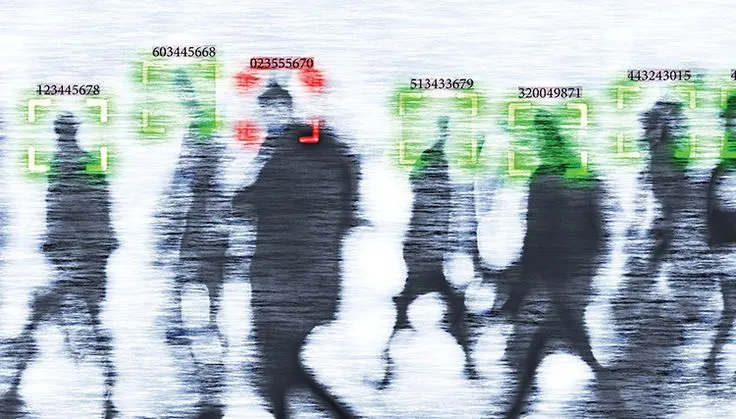
THE LABELLERS · counted by the systems, not by the frameworks
SOURCE: TIME investigation (2023): take-home wages of $1.32–$2/hr, verified against payslips and internal documents.
The blind spot
WHY NARROW ROOMS MISS THINGSThis is not just unfair: it is a measurable prediction error. Scott Page's diversity prediction theorem holds that a group's collective error is bounded by how varied its members' mental models are. A room that thinks alike misses alike.
The receipts: risks that were real for years before any framework named them.
RHYME
This is not the first time a narrow room has written the rules. The OECD later attributed part of the 2008 financial crisis to a regulatory revolving door, the watchers drawn from the watched. At Asilomar in 1975, the recombinant-DNA guidelines were written by molecular biologists, for molecular biologists, in a room with no public health voice. Narrow rooms tend to produce rules shaped like the people in them.
SOURCES: Page, The Difference; Bender et al., "Stochastic Parrots" (2021); Strubell et al. (2019); OECD.
A wider room
THE FIX IS KNOWNThe fix is not complicated. Only uncomfortable.
Mandatory panel-composition rules for safety bodies: geography, discipline, lived proximity to harm.
Demographic transparency from safety organisations: publish who is in the room.
Signatory lists that actually reach beyond the usual ten.
The field just has to decide that the people most likely to be harmed deserve a seat at the table.
Top-cited AI safety authorship by country. Primary quantitative source.
The 193 / 7 / 118 figures; annex has the country-by-initiative matrix.
African researchers: under 0.05% of AI-conference publications.
Mission statement and the ten initial members.
Annual budgets ≈$10M; UK £100M secured to 2030.
Take-home wages $1.32–$2/hr, verified against payslips.
N=10,800: immediate harms outrank existential risk in public concern.
The funder concentration, in the funder's own words.
The diversity prediction theorem.
Time-series and national-policy overlays, for extension.